
| Phil McDougall
The Hardstyle swing is the great white shark of exercises. It doesn’t need to evolve. Unfortunately, the version most people perform in gyms has evolved plenty, and not in a good way. I’ve coached the swing to everyday clients, athletes and personal trainers on both sides of the Atlantic, and the same handful of mistakes turns up again and again.
The good news is that every one of them can be fixed with the right drill and a bit of patience. Here are the eight I see most often, why they matter and exactly how to fix them.
A quick word of caution before we start. If you have back pain or a history of back injury, get checked out by a qualified health professional before you swing anything, and learn from a certified instructor. A blog post (including this one) is no substitute for a coach’s eyes.
What a Good Swing Looks Like
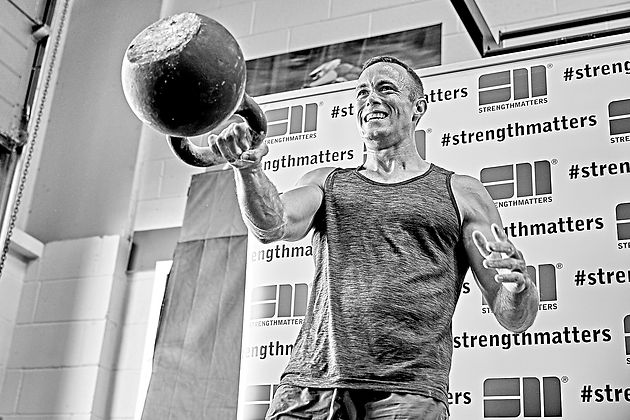
A swing is a hip hinge. It is not a squat and it is not a front raise. The hips load backward like a coiled spring, then snap forward to drive the bell. The arms are just ropes connecting you to the kettlebell. At the top you’re a standing plank: glutes and abs squeezed, knees locked, ribs down, eyes forward. At the bottom, the bell travels high between the legs and your forearms brush your inner thighs. The power comes from the hips; the lats guide the bell back down.
Mistake 1: Squatting the Swing
What it looks like: the knees shoot forward, the hips drop down instead of back and the bell swings low toward the floor. You’ve turned a hip-dominant exercise into a knee bend, which means less power from the glutes and more strain on the knees and lower back.
The fix: the wall hinge. Stand with your heels about a foot from a wall, knees soft, and push your butt back until it touches the wall while your shins stay close to vertical and your spine stays long. Shuffle an inch further away and repeat. Then practice deadlifting the kettlebell from between your feet with the same hinge. If you can’t deadlift a kettlebell well, you have no business swinging it yet.
Mistake 2: Lifting the Bell with Your Arms
What it looks like: a front raise with a bit of hip wiggle. The shoulders and upper traps burn, the hips barely work and the bell climbs because the arms are pulling it there. The height of the bell is a result of the hip snap, nothing more. If you were to vanish at the point of hip extension, the bell should float up on its own.
The fix: dead-stop swings. Hike the bell back, snap the hips, let it float, then guide it back and park it on the floor in front of you after every single rep. Resetting each time stops you from muscling a rhythm with your arms. Think “hips snap, arms float.” In a Hardstyle swing the bell should finish around chest height with straight arms, not overhead.
Mistake 3: Shrugging the Shoulders
Shoulder shrugging is the international symbol for “I have no idea what I’m doing.” It’s number three in my Ten Commandments of Kettlebell Training for good reason. A shrugged shoulder disconnects the arm from the lats, so the bell yanks on your neck instead.
The fix: keep your shoulders away from your ears and your armpits “closed.” On the backswing, actively pull the bell back between your legs with your lats, like a center hiking a football. Practice hikes on their own: bell on the floor in front of you, hike it back hard, then park it. Ten crisp hikes teach more than fifty sloppy swings.
Mistake 4: Leaning Back at the Top
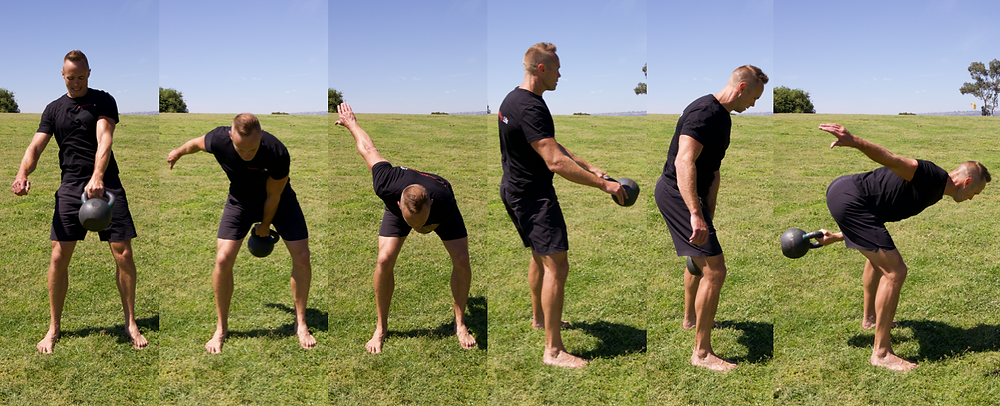
What it looks like: the lifter throws their shoulders back and arches the lower back at the top of every rep, finishing like a limbo dancer. The lumbar spine ends up absorbing the force that the glutes and abs should be handling.
The fix: finish every rep as a vertical plank. Practice a Hardstyle plank on the floor first: squeeze your glutes and quads, make fists, brace your abs and pull your elbows toward your toes for ten seconds. Then take that exact tension into the top of the swing. Try a few swings where you freeze for a second at the top and check yourself: body in a straight line, hips fully extended, knees locked, ribs down.
Mistake 5: A Lazy Backswing
Most new lifters are so focused on what’s happening in front of them that they forget about the backswing. The bell drifts down toward the knees, the hips barely load and there’s nothing to snap. An elastic band won’t fly far if you only pull it back a little bit.
The fix: hike the bell high and tight. The handle should pass above knee level, your forearms should make contact high on your inner thighs and the bell should look like it’s heading for your zipper. Don’t hinge too early. Let the bell fall until your upper arms meet your ribs, then hinge and load the hips hard.
Mistake 6: Breathing Out of Sync
Some people hold their breath for an entire set. Others pant like they’ve just run for a bus. Neither helps. In Hardstyle we match the breath to the movement:
Take a short, sharp sip of air through the nose as the bell travels back into the hike.
Exhale sharply with a short hiss at the moment the hips snap through and the abs brace.
One breath cycle per rep. No more, no less.
This power breathing creates pressure in the abdomen that protects the spine and adds punch to every rep. If you have high blood pressure or a heart condition, talk to your doctor before training with heavy bracing.
Mistake 7: Twisting on One-Arm Swings
Once two-hand swings look good, one-arm swings add a new challenge: resisting rotation. A kettlebell in one hand wants to twist your torso, and if you let it rotate at the bottom, rotation becomes the driver on the way back up. The hips get cheated out of a job.
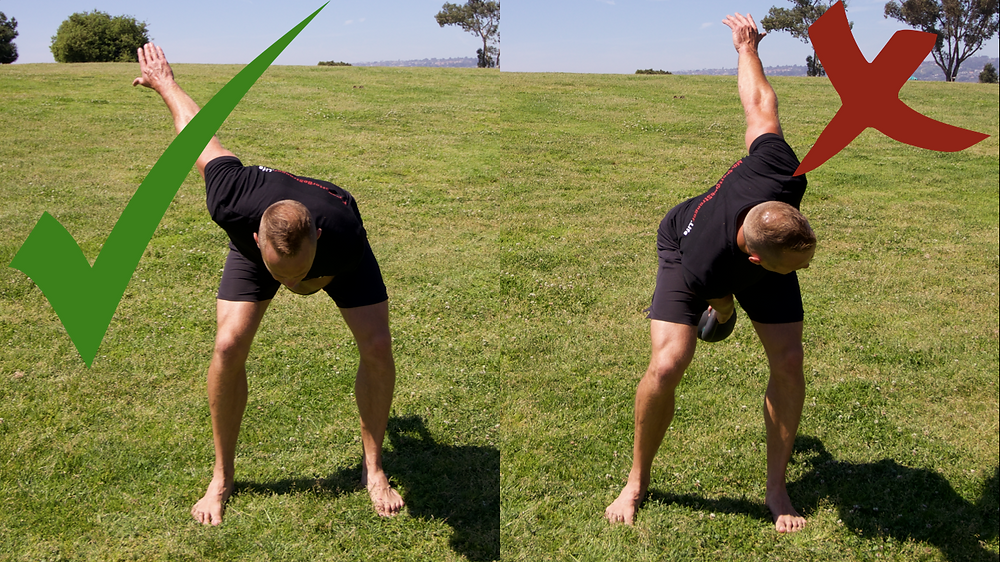
The fix: keep your chest and hips square to the front throughout. Grip the handle hard, keep the working shoulder packed and let your free hand mirror the working arm or guard your ribs. Drop to a lighter bell for one-arm work at first.
Mistake 8: Too Many Reps, Too Little Rest
If Girevoy Sport is like jogging, Hardstyle is like sprinting. When people grind out fifty swings in a row, the snap disappears after the first dozen or so and form falls apart. At that point it isn’t Hardstyle any more, it’s just tired swinging.
The fix: short sets with real rest. A simple way to start is ten crisp swings at the top of every minute for ten minutes. That’s a hundred quality reps with time to recover between sets. And treat the first and last rep with the same care as the rest: hike the bell to start, and when you finish, guide it back between your legs and park it on the floor in front of you. Sloppy pickups and put-downs are where a lot of backs get tweaked.
Choose the Right Bell
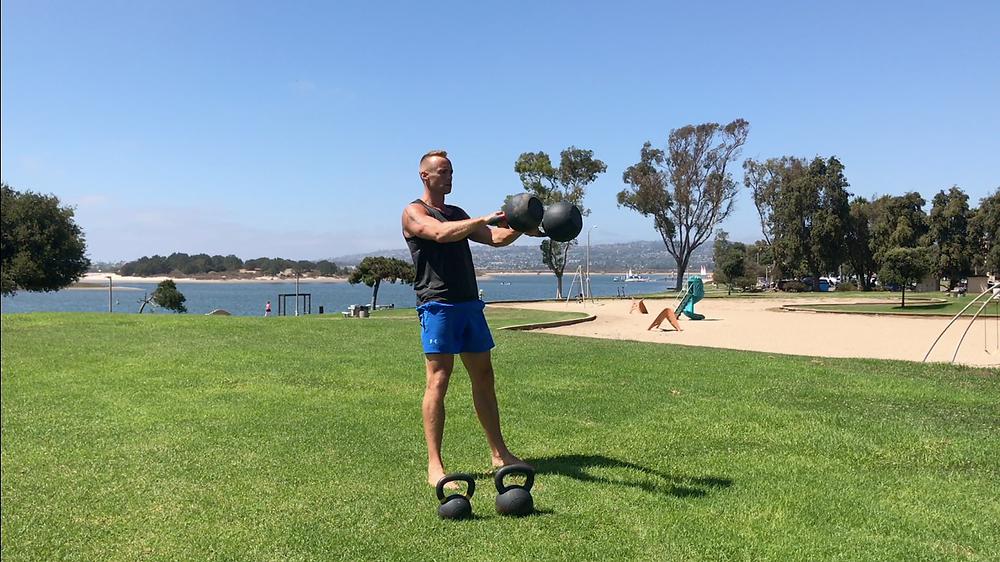
Many swing problems get worse with the wrong kettlebell. Too light and you’ll muscle it with your arms. Too heavy and you’ll squat it. If you’re not sure where to start, read Choosing Your First Kettlebell Weight. Once your swing is solid, swinging two bells of different weights is a great way to challenge your anti-rotation strength, as I explain in Offset Kettlebell Magic.
Get Eyes on Your Swing
Film yourself from the side and check four things: a hinge rather than a squat, a vertical plank at the top, the bell floating no higher than chest height and your forearms meeting your thighs high on the backswing. Better still, get a qualified instructor to watch you.
If you want help, I teach the swing in one-to-one personal training sessions and at my workshops, and you can check the remote coaching page for current availability. For the bigger picture, read my Essential Guide to Kettlebells. When your swing is bulletproof, the next step is the kettlebell snatch.
Strength and honor!
Phil McDougall
Keep Reading